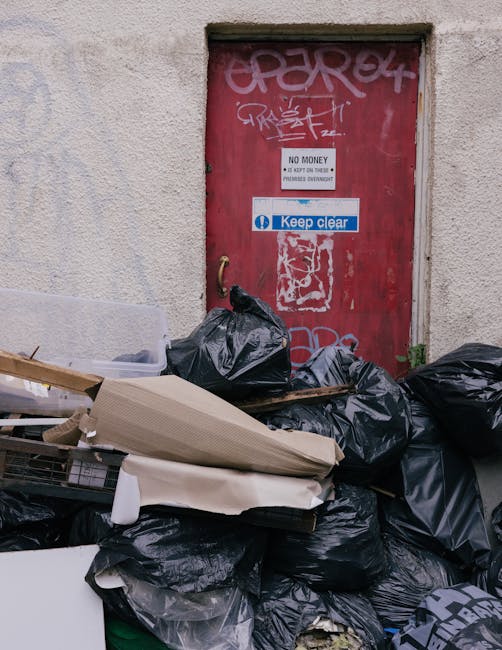
Bounds Green business rubbish removal for shops and cafes
If you run a shop or cafe in Bounds Green, waste has a habit of piling up at exactly the wrong moment. Boxes by the till, broken chairs in the back room, delivery packaging in the doorway, food prep waste in the kitchen, old fixtures under a sheet in the stock area-it all starts small, then suddenly feels like a fire drill. That is where Bounds Green business rubbish removal for shops and cafes becomes less of a nice extra and more of a practical part of keeping the place running smoothly.
This guide breaks down how it works, what to expect, and how to avoid the common headaches that come with commercial waste. If you want a cleaner trading space, fewer interruptions, and a more sensible way to handle bulky rubbish, you are in the right place. Let's keep it simple, useful, and properly grounded in real day-to-day operations.
In short: the best rubbish removal setup for a shop or cafe is one that fits your trading hours, handles mixed waste safely, and keeps your team focused on customers instead of dragging sacks to the pavement before 8 a.m. on a wet Tuesday.
Why Bounds Green business rubbish removal for shops and cafes Matters
For a local business, rubbish is not just an eyesore. It affects safety, speed, staff morale, customer experience, and even how confident people feel walking in. A cafe with overflowing bins near the entrance looks rushed, even if the coffee is excellent. A shop with old packaging, damaged display units, or stockroom clutter starts to feel harder to shop in. People notice these things very quickly, often without saying a word.
In Bounds Green, where businesses often work in compact spaces and rely on smooth daily routines, waste needs a proper plan. That is especially true for cafes, takeaways, mini markets, gift shops, salons, and independent retail units where every square metre counts. If waste is handled badly, it can block fire exits, attract pests, create slips and trips, and slow down deliveries or customer access. Not ideal. Not even close.
There is also the time factor. Staff should be serving customers, making drinks, restocking shelves, or setting up displays-not figuring out where to put a mountain of cardboard or a worn-out fridge unit. A reliable business rubbish removal arrangement reduces that pressure and gives you breathing room. The difference is often felt before it is seen.
For businesses wanting a wider service approach, it can also make sense to understand the broader business waste removal options available, especially if your waste stream changes from week to week.
How Bounds Green business rubbish removal for shops and cafes Works
Most commercial rubbish removal jobs follow a straightforward flow, but the details matter. A good provider will usually start by understanding what you need removed, how often, and whether the waste is mostly light packaging, mixed general rubbish, old furniture, or heavier items such as shelving or appliances. The more specific you are, the smoother the job tends to go.
For a shop, this might mean clearing old display stands, cardboard, broken stockroom items, and out-of-date fixtures. For a cafe, it may involve chair sets, tables, kitchen equipment, food-safe containers, packaging, or end-of-season clutter that has nowhere else to live. Sometimes it is a one-off clear-out after a refit. Sometimes it is a recurring practical reset after a very busy trading period. Both are common.
Here is the usual process:
- Initial assessment: you explain the type and volume of waste, along with access details and timing.
- Quote or estimate: the service is priced based on load size, waste type, labour, and access conditions.
- Collection plan: a convenient slot is arranged, often outside peak trading times if needed.
- Removal: the team loads the waste safely and takes it away in one visit where possible.
- Sorting and disposal: recyclable materials, reusable items, and general waste are handled appropriately.
That sounds simple, and mostly it is. But the real value is in the planning. A cafe at 7:30 in the morning is a very different site from one at 3:00 p.m. on a Friday, when customers are coming and going and the smell of fresh pastry is doing half the marketing for you.
If you need a service that can handle bulky or mixed commercial items as part of a broader clearance, the dedicated waste removal page is also useful to review.
Key Benefits and Practical Advantages
The obvious benefit is getting rid of rubbish. But the stronger value is what that change does for day-to-day trading. Cleaner spaces are easier to work in, easier to keep compliant, and easier to present well. That matters whether you serve flat whites, floral gifts, sandwiches, stationery, or something more niche.
- Better presentation: customers are more comfortable in a tidy, uncluttered space.
- Improved safety: less trip risk, fewer blocked routes, less chance of accidents around storage areas.
- Faster turnover: staff can reset the space quicker after deliveries, promotions, or menu changes.
- More usable storage: stockrooms and back-of-house areas work better when junk is gone.
- Less disruption: the job is handled externally instead of using your own team's time.
- Better recycling outcomes: more of the waste can be separated and diverted correctly.
There is also a quieter benefit: peace of mind. If you know the rubbish will be collected properly, the back yard stops becoming a weekly argument. That alone can lift the mood in a small team. Truth be told, a calm stockroom tends to produce calmer people.
Expert summary: the best rubbish removal service for shops and cafes is not just quick. It is predictable, tidy, safe, and flexible enough to fit around trading hours without making your business feel like a building site.
Who This Is For and When It Makes Sense
This kind of service is a strong fit for shop owners, cafe managers, landlords, franchise operators, and independent traders who need commercial rubbish cleared without drama. It is also helpful for businesses that do not produce huge volumes every day but occasionally face a messy spike after a refit, stock change, equipment upgrade, or end-of-lease tidy-up.
You will likely benefit from it if any of these sound familiar:
- You keep old stock, packaging, and broken items in the back because there is nowhere else for them.
- Your team is spending too much time managing waste instead of serving customers.
- You are preparing for a fit-out, rebrand, deep clean, or inspection.
- You have bulky items that will not fit in standard bins.
- You need rubbish gone quickly before opening hours or after closing time.
- You want a more reliable alternative to piling things outside and hoping for the best.
There is a difference between a one-off clear-out and ongoing commercial waste management, of course. A cafe with heavy daily food waste may need a recurring arrangement, while a small gift shop may only need occasional clearance after seasonal stock rotation. That distinction matters because it shapes both cost and the best method.
If your shop furniture is part of the job, the related furniture clearance and furniture disposal pages may also be helpful for planning mixed-item removals.
Step-by-Step Guidance
Here is the practical version, the one that saves time and avoids those awkward last-minute scrambles.
1. Sort the waste into clear groups
Start by separating cardboard, general rubbish, broken fixtures, old furniture, and anything that may need special handling. You do not need perfect organisation, but some order helps. A mixed pile is fine, yet a pile with a rough idea of what is inside is much easier to handle.
2. Measure the access route
Think about doors, stairwells, rear entrances, alley access, loading points, and whether there is enough room for a collection vehicle. This is one of those details that seems small until it becomes the problem. In a tight Bounds Green high street unit, access can change everything.
3. Choose the right collection window
For shops and cafes, timing is often the difference between a smooth job and a stressful one. Early morning, between shifts, or after closing can work well. If the pavement gets busy fast, arrange the removal before the rush starts. You really do feel the difference when the job is done and customers arrive to a clean frontage.
4. Ask about labour and loading
Some waste can be wheeled easily. Some needs lifting, carrying, or dismantling. A proper quote should reflect that. If a fridge, counter, or shelving unit needs careful removal, that is not the same as moving a few sacks. It should not be priced as if it were.
5. Confirm how recyclable materials are handled
Cardboard, clean metal, certain plastics, and some wooden fixtures may be recyclable or reusable. A responsible service should explain how they separate materials. If you care about waste reduction, this is a useful question to ask upfront rather than after the job.
6. Keep a record of what was taken
For business records, it helps to note the date, what was removed, and who handled it. That way you can track recurring waste patterns and make better decisions next time. Small habit, big payoff.
Expert Tips for Better Results
After enough clearances, a few patterns show up. The businesses that have the easiest experience are usually not the ones with the least waste. They are the ones that plan slightly better.
- Schedule around delivery times: this avoids trucks, trolleys, and people all competing for the same space.
- Tell the team what is being removed: confusion leads to items being moved twice. A classic waste of energy.
- Keep walkways open: the quicker the loading, the safer the site.
- Bundle similar items together: this speeds up sorting and loading.
- Use a quick pre-visit photo check: even a few photos can help get the quote and vehicle size right.
- Ask about recycling first: some items that look like rubbish may be better treated as reusable or recyclable material.
A small, honest tip: do not leave clear-out decisions until the day before a refit. That last-minute approach usually ends with someone muttering into a coffee cup at 6 a.m. and nobody needs that energy.
If you want to compare how different clearance jobs are handled, it can be useful to look at related services such as office clearance and builders waste clearance, especially if your shop or cafe is being renovated.
Common Mistakes to Avoid
The most common mistakes are usually practical, not dramatic. And they are easy to avoid once you know them.
- Underestimating volume: waste always looks smaller before it is gathered into one place.
- Ignoring access restrictions: a narrow rear alley or shared entrance can affect the whole job.
- Leaving bags outside too early: this can create clutter, attract pests, and annoy neighbours.
- Mixing everything together without checking: some items may need different handling.
- Choosing a collection window during the busiest trading period: that often creates more work than it saves.
- Forgetting the back room: the visible rubbish is rarely the full picture. The stockroom usually tells the truth.
Another easy mistake is assuming every provider will handle the same kind of job in the same way. They will not. Some are better suited to bulky commercial clearances, some to routine business waste, and some to one-off mixed rubbish. Ask direct questions. It saves awkwardness later.
Tools, Resources and Recommendations
You do not need a complicated system to manage business rubbish well. A few simple tools and habits go a long way.
- Stackable bins or sacks: useful for separating cardboard, general waste, and light packaging.
- Labelled storage zones: especially helpful for stockrooms and back-of-house areas.
- Photo records: a quick before-and-after image helps with planning and accountability.
- Basic weighing or volume estimates: even rough measurements help avoid surprise costs.
- Good-quality gloves and safe lifting practices: sensible for your staff if they are moving items before collection.
It also helps to choose providers that are transparent about process and payment. Pages like pricing and quotes, payment and security, and recycling and sustainability are worth reviewing if you want a clearer idea of how the service is structured and how materials are typically handled.
For businesses that care about operational trust and service standards, it can also be reassuring to check company information such as the about us page and the insurance and safety details before booking. It is one of those boring-but-useful checks. The good kind of boring.
Law, Compliance, Standards, or Best Practice
Commercial rubbish handling in the UK comes with responsibilities, even when the job looks simple on the surface. Shops and cafes are expected to manage waste safely, store it responsibly, and use a suitable carrier for removal. You do not need to become a compliance expert overnight, but you should know the basics and ask sensible questions.
In practical terms, that means the business should avoid leaving waste where it can cause hazards, should not allow rubbish to block fire exits or customer access, and should be careful with anything that could leak, spill, or attract pests. Food businesses, in particular, tend to need a little more discipline around hygiene and back-of-house storage. Fair enough, really.
If waste includes electrical items, food prep equipment, or furniture, it is best to confirm how those items are being sorted and handled. You do not want guesswork here. Good providers will explain what happens to different material types in plain English, and that usually tells you a lot about how seriously they take the work.
Best practice also includes keeping invoices or records, especially if rubbish removal is part of routine operations, a refit, or an end-of-tenancy process. If you ever need to demonstrate what was removed and when, those records matter more than people expect.
And yes, even the unglamorous stuff matters. Safety policy documents, complaint procedures, and clear terms are not exciting reads, but they are often the difference between a tidy service relationship and a messy one. For that reason, pages such as complaints procedure and terms and conditions can be worth a quick look before you commit.
Options, Methods, or Comparison Table
Different businesses need different approaches. Here is a simple comparison to help you decide what fits best.
| Method | Best for | Strengths | Limitations |
|---|---|---|---|
| Regular commercial waste collection | Ongoing everyday rubbish | Predictable, routine, easy to manage | Less flexible for bulky one-off items |
| One-off rubbish removal | Clear-outs, refits, end-of-season waste | Fast, targeted, ideal for bigger loads | Not always the cheapest for frequent waste |
| Mixed business waste removal | Shops and cafes with varied waste streams | Convenient, handles packaging, furniture, and general rubbish together | Needs clearer sorting and access planning |
| Bulky item clearance | Old counters, tables, chairs, shelving, appliances | Useful for awkward objects and heavy lifting | May need more labour or specific timing |
For many independent businesses, the best answer is actually a combination. Routine waste for the day-to-day, plus occasional clearance for anything bulky or disruptive. That balance keeps the site tidy without overcomplicating things.
Case Study or Real-World Example
A small cafe in Bounds Green finishes a short refurbishment after replacing worn chairs, changing the counter layout, and clearing out months of packaging from the storeroom. The owners are open early, so the job has to happen before customers arrive. Nothing dramatic, just a tight window and a lot to move.
The first step is sorting. Cardboard boxes are stacked separately, broken furniture is grouped near the rear exit, and small mixed rubbish is bagged so it can be loaded quickly. The team also checks the route out to the vehicle, because the back access is narrow and there is not much room to improvise.
The removal is done in one visit, with the heavier items taken first and the lighter rubbish packed around them. By the time the cafe opens, the floor is clear, the back room is usable again, and the front of house feels fresh. No smell of old packaging, no cluttered corners, no awkward pile by the bins. Just easier trading.
That kind of result is common when the booking is planned properly. Not flashy. Just effective. And that is usually what businesses actually want.
Practical Checklist
Use this checklist before you book.
- Have you listed all the items that need removing?
- Have you separated cardboard, general rubbish, furniture, and equipment?
- Do you know when the best access window is?
- Have you checked rear entry, stairs, or narrow passages?
- Have you estimated the volume honestly, not optimistically?
- Do you need help with heavy lifting or dismantling?
- Have you thought about recycling and reusable items?
- Have you arranged the job around customers and deliveries?
- Do you know who will be on-site to confirm the collection?
- Have you kept any records you may need later?
If you can tick most of those off, you are already ahead of the game.
Conclusion
For shops and cafes in Bounds Green, rubbish removal works best when it is treated as part of the business rhythm, not a panic task after things have already got out of hand. A little planning goes a long way. So does choosing a service that understands access, timing, mixed waste, and the realities of trading in a busy local area.
The aim is not just to get rid of rubbish. It is to keep the space usable, presentable, and safe enough for staff and customers to move through it without friction. That might sound basic, but honestly, basic done well is what keeps a business feeling calm.
Get a free quote today and see how much you can save.
When the back room is clear and the front of house feels light again, everything tends to run a bit better. Funny how that works.
Frequently Asked Questions
What counts as business rubbish removal for a shop or cafe?
It usually includes general rubbish, cardboard, packaging, broken furniture, old fixtures, stockroom clutter, and bulky items that cannot go in standard bins. For cafes, it can also include worn catering equipment or end-of-fit-out waste.
Can rubbish be collected outside trading hours?
Yes, often it can. Many shops and cafes prefer early morning, late evening, or quieter mid-afternoon slots so customer traffic is not disrupted. The right timing makes a big difference in a busy unit.
Do I need to sort the waste before collection?
Some sorting is helpful, but it does not need to be perfect. Separating cardboard, general waste, and bulky items makes the job quicker and often makes the quote more accurate. A bit of order goes a long way.
Is this service suitable for a one-off cafe refurbishment?
Absolutely. One-off clearances are common for refurbishments, menu changes, seasonal resets, and end-of-tenancy jobs. They are often the best option when you have a lot to remove at once.
What if I have old chairs, tables, or counters?
Those are usually handled as bulky items or furniture clearance. If the items are heavy, awkward, or need dismantling, it is best to mention that upfront so the removal is planned properly.
How do I know if a provider is handling waste responsibly?
Ask how materials are sorted, whether recyclable items are separated, and whether the provider is transparent about disposal practices. Clear communication is usually a good sign. Vague answers are not ideal.
Will rubbish removal disrupt customers?
It does not have to. If the job is scheduled well and the route in and out is kept clear, disruption can be kept very low. In many cases, customers barely notice anything except the improved tidiness afterwards.
Can this help with stockroom clutter?
Yes. Stockrooms often accumulate packaging, damaged items, redundant displays, and things that have been waiting for "later" for far too long. Clearing that space can make day-to-day work much easier.
What should I ask for when getting a quote?
Ask about the type of waste, approximate volume, access conditions, labour required, timing, and whether any items need special handling. A clear quote depends on clear information. Simple as that.
Is there a difference between rubbish removal and business waste collection?
Yes. Business waste collection is often routine and recurring, while rubbish removal is usually more flexible and suited to one-off or bulky clearances. Many businesses use both, depending on the situation.
Can commercial rubbish removal include recycling?
It should, where suitable. Cardboard, metal, and some wood or reusable fixtures may be separated for recycling or reuse. If sustainability matters to your business, ask about that before booking.
Where can I learn more about the company before booking?
You can review the company's about us information, check insurance and safety, and look at recycling and sustainability for a better sense of how the service is run.